A fibre list looks like the least interesting thing on a label. It is the most reliable thing on a label, because it is the part a rule dictates word by word.
Three rules do nearly all the work. Fibres appear by weight, small fibres drop out below a floor, and the words All and 100% have a fixed meaning. Learn those and you can read stretch, drape and washing risk off a line of text.
The order is the information
Fibres are named by their common names, and they are listed heaviest first. That single fact tells you what the fabric behaves like.
Except where another name is permitted under the Act and regulations, the respective generic names of all fibers present in the amount of 5 per centum or more of the total fiber weight of the textile fiber product shall be used when naming fibers in the required information; as for example: “cotton,” “rayon,” “silk,” “linen,” “nylon,” etc.
So ninety-five percent polyester with five percent spandex is a polyester garment that stretches. Sixty percent cotton with forty percent polyester is a cotton-feeling garment that creases less and dries faster than pure cotton would.
The first name also predicts the tag. Cotton leads and you will usually see a machine wash line. Rayon or viscose leads and you will often see hand wash or dry clean, because those fibres lose strength when wet.
Sets where the fabric does the shaping
All 116

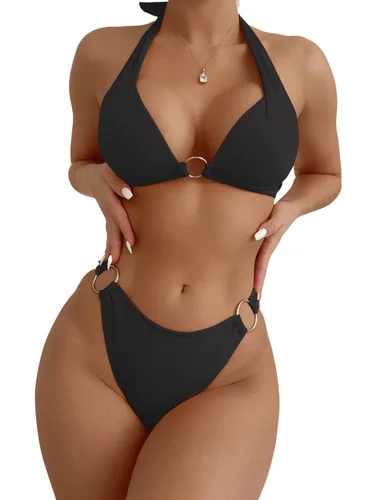
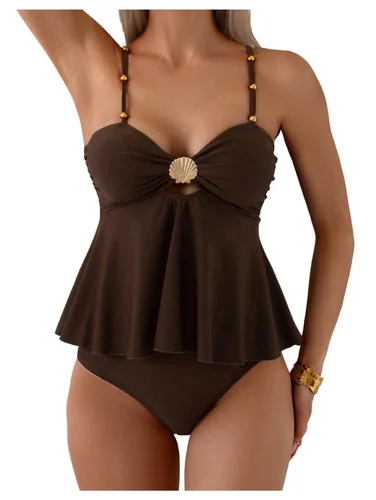
SweatyRocks Ring Linked Halter Push Up Bikini Swimwear Set
$29.99S M L
4.0 out of 5 from 488 ratings
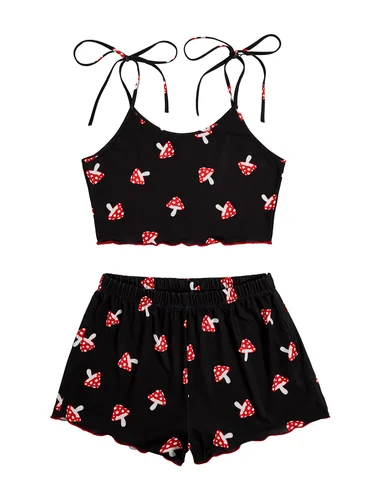
The five percent floor, and what falls through it
Anything under five percent of the weight loses its name. It is not hidden and it is not omitted. It is renamed.
no fiber present in the amount of less than 5 percent of the total fiber weight shall be designated by its generic name or fiber trademark in disclosing the constituent fibers in required information, but shall be designated as “other fiber.”
The rule leaves one door open. A fibre below the floor may be named when it does a definite job, and stretch is the usual reason. That is why you sometimes see three percent spandex spelled out.
This matters for anyone who reacts to a fibre. A list ending in other fiber is telling you that something under five percent is in there, and it is not telling you what. If wool or a particular synthetic causes you trouble, that phrase is a reason to ask rather than to assume.
All and 100% are defined words, with an escape hatch
Both words mean the whole fabric is one fibre. Both also come with a legal exception for the decorative parts.
Where a textile fiber product or part thereof is comprised wholly of one fiber, other than any fiber ornamentation, decoration, elastic, or trimming as to which fiber content disclosure is not required, either the word All or the term 100% may be used in labeling
So a shirt labelled 100% cotton can legitimately have a polyester lace trim at the cuff and an elastic thread at the neck. The label is accurate. The trim simply sits outside what the percentage covers.
For most people this is harmless. For anyone washing a piece hot to sanitise it, or anyone whose skin objects to synthetics, the trim is exactly the part that touches you.
Tops where trim and body are different fabrics
All 103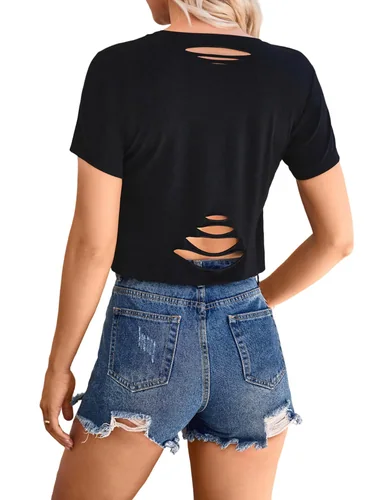
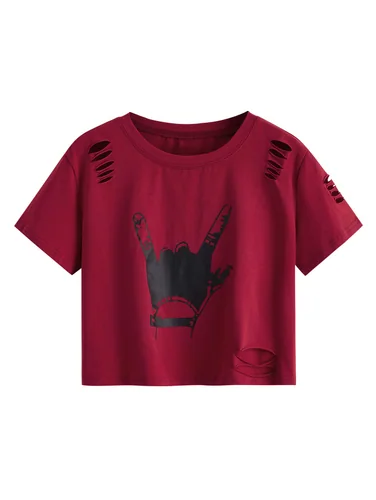
SweatyRocks Short Sleeve Graphic Tee Shirt Summer Distressed
$14.99M
4.2 out of 5 from 8,218 ratings
Wool carries its own rulebook
Wool sits under a separate act, and it gets treated differently from every other fibre on the list. Its percentage is always stated, even below the five percent floor.
except that the percentage of wool or recycled wool shall always be stated
The same rulebook polices the flattering adjectives. Virgin and new are not marketing words, and a maker cannot use them on fibre that has been through a product before.
The terms “virgin” or “new” as descriptive of a wool product, or any fiber or part thereof, shall not be used when the product, fiber or part so described is not composed wholly of new or virgin fiber which has never been reclaimed from any spun, woven, knitted, felted, braided, bonded, or otherwise manufactured or used product.
Recycled wool is not a lesser thing, and the word is not a warning. It is reclaimed fibre, usually shorter, which makes a fabric that pills sooner and holds warmth just as well.
What this range names, and where it stays quiet
Fibre words are rare in the names the maker writes. Across 458 live lines, 27 name a fibre at all.
| Fibre word in the name | Lines |
|---|---|
| Satin | 18 |
| Silk | 8 |
| Denim | 3 |
| Linen | 2 |
| Leather | 2 |
Satin leads that short list, and satin is a weave rather than a fibre. It can be polyester, it can be silk, and the name alone does not settle it. The 8 lines that say silk are the ones that name the fibre outright.
Where a line does not name a fibre, this site prints no fibre line for it. That is a gap we could paper over with a plausible sentence, and papering it over is how a shopper ends up with a fabric they cannot wear. The label in the parcel is the record.
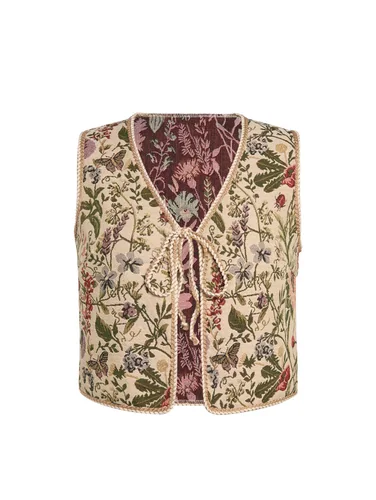
Outerwear, where the fibre list changes the warmth
All 44
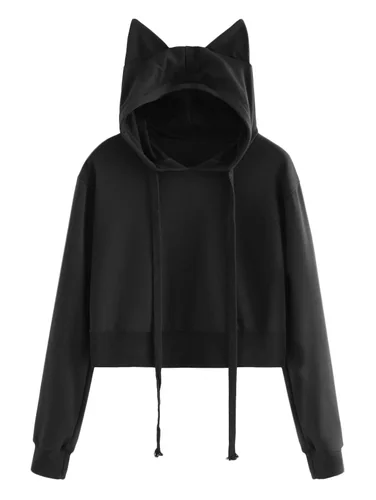
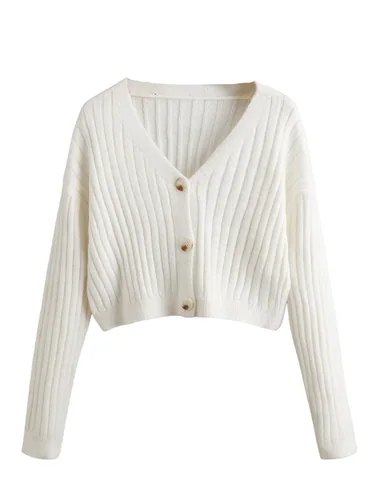
Reading stretch off the list
Elastane and spandex are the same fibre under two names, and the percentage behaves like a dial.
- Two percent or less. Enough to stop a knit bagging at the knee and elbow. The fabric still fits like a woven cloth.
- Three to five percent. The usual figure on a fitted top or a stretch denim. You can size down one letter if you want it close.
- Eight percent and up. Leggings, swim, bodycon. The fabric fits you rather than the other way round, and a size chart matters less than the fabric.
One warning that no percentage shows. Elastane is the first thing heat destroys, so the dryer costs you the stretch long before the fabric wears through.